Valorant Ranked System Explained: Tiers, RR, and MMR
What the report saysYou finished 29 and 5, top fragged both halves, clutched a 1v3 on Lotus B site, and Valorant handed you 19 RR. Your duo, who went 8 and 14, got 23 RR. If you have ever stared at the post-match screen…
What the report says
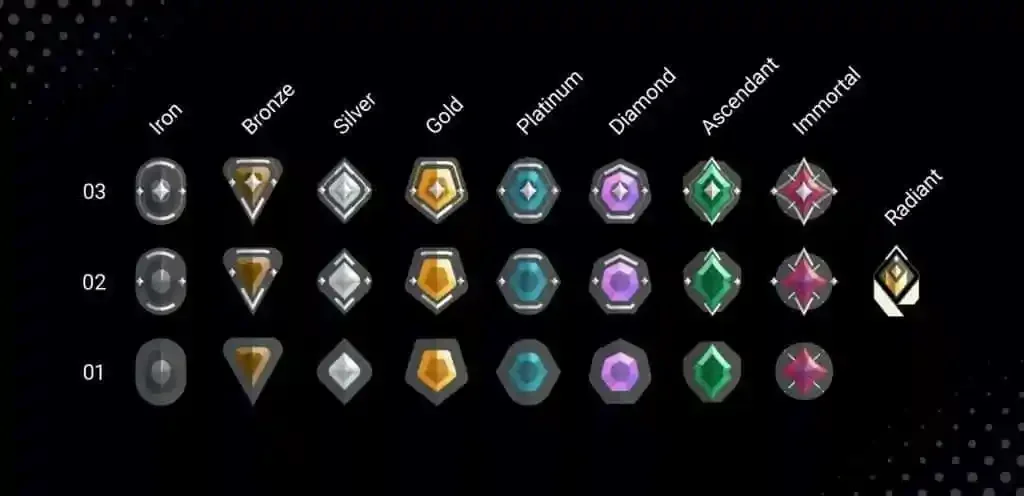
You finished 29 and 5, top fragged both halves, clutched a 1v3 on Lotus B site, and Valorant handed you 19 RR. Your duo, who went 8 and 14, got 23 RR. If you have ever stared at the post-match screen, wondering what alternate universe the matchmaker lives in, welcome to Valorant’s competitive ranking system, where rank rating, a hidden MMR value, and the act rank badge all quietly fight over what your climb looks like. Here is how every piece of Valorant’s ranking system actually works in the 2026 season.The Nine Tiers of Valorant’s Competitive RanksValorant’s competitive ladder holds 25 ranks spread across nine tiers.
Eight of them (Iron through Immortal) have three divisions each. Radiant sits alone at the top as a single tier reserved for the very best players on each server, roughly the top 500 on your region’s leaderboard. The ladder looks like this before anyone touches it with a boost, a smurf, or a voice comms meltdown.Ascendant was added back in Episode 5 to stretch the gap between Diamond and Immortal, and it still earns its keep in 2026. The jump from Diamond 3 to Ascendant 1 is where most players feel the game gets genuinely brutal.
Suddenly, your flashes get turned on, your operator peeks get pre-aimed, and the round loss screen starts to feel personal.How to Unlock Competitive ModeTo unlock competitive mode, you need to hit account level 20. That replaces the old requirement of 10 unrated wins, and it still filters out people who would otherwise queue ranked after a single Swiftplay game. Once you unlock ranked, your first task is five placement matches, and those games decide where you start the act.Players who do not want to spend a weekend grinding Spike Rush and unrated sometimes shortcut the process entirely by getting a ranked-ready Valorant account, which skips the level 20 wait and drops them straight into competitive play.

Key details
Whether that trade is worth it depends on how much you care about the early agent contracts and the feel of learning Valorant from scratch.Rank RatingRank rating, or RR, is the visible number that ticks up or down after every ranked match. Each division holds 100 RR. Win a game, you get between 10 and 50 RR. Lose one, you drop 10 to 30 RR. Hit 100 in your current rank, and you promote. Fall to 0 and lose again, and you risk getting demoted. Four things decide the exact number on the post-game screen.Win or loss.
The biggest single factor. Winning always beats losing, no matter how many aces you pop on the way down.Round difference. A 13 to 3 stomp pays more RR than a sweaty 13 to 11 coinflip, because the system reads round diff as a proxy for the actual skill gap in the lobby.Performance bonus. If you vastly outplay your current rank, the game throws extra RR your way. This exists to drag smurfs up the ladder faster and stop them from ruining lower ranks for too long.Convergence. This is where the hidden MMR does its real work by multiplying or shrinking your RR depending on how far your matchmaking rating has drifted from your visible rank.If your MMR says you should be Platinum 2, but you are still stuck in Gold 2, every win pays more and every loss stings less.
The reverse is also true. Players sitting above their MMR bleed RR faster on losses and earn scraps on wins, which is the system telling you the ladder and your real skill have separated. It is rank rating gains and losses doing what they are designed to do: pulling your current rank and RR back toward reality.Every promotion (except into Radiant) also comes with a rank rating shield for your first two matches in the new division. Lose both, and you sit at 70 RR instead of getting bounced straight back down. It is a small safety net, but it matters more than you think after a long climb through a sticky tier like Plat 3.MMR in ValorantYour rank rating is the number you see.
More from the announcement
Your matchmaking rating is the number actually running the matchmaker. Every player carries an MMR, and Valorant uses it every ranked match to pair you with opponents of similar skill, not players of similar RR. This is why two Gold 3 friends can load into a lobby full of Platinum 2s, and why someone can beg for a duo carry and then get dropped into a game their partner has no business being in.MMR moves faster than RR.